

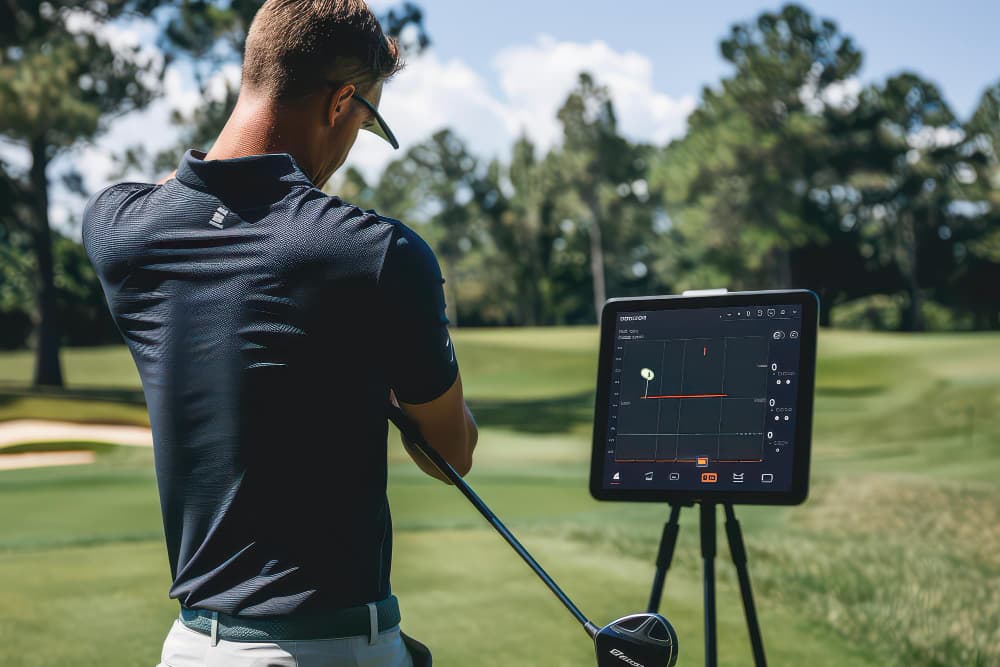
Golf has always been a game of feel. Players talk about rhythm, balance, tempo and touch because so much of the sport depends on repeatable movement and quiet confidence. But modern practice is increasingly being shaped by something more measurable: data.
How Data Is Changing Golf Training
Traditional golf practice often involved hitting a bucket of balls and judging success by sight and feel. While that still has value, it can also be misleading. A shot might feel good but produce poor numbers or feel uncomfortable because a player is making a necessary technical change.
Data driven practice gives golfers evidence. Instead of simply asking whether a shot looked better, players can measure launch angle, spin rate, carry distance, dispersion and strike consistency. This creates a clearer link between practice habits and real performance.
Key Metrics Players Track
The most useful data depends on the golfer’s level and goals, but several metrics appear again and again. Swing speed can show whether a player is generating power efficiently. Ball speed helps reveal how well energy is transferred at impact. Carry distance shows how far each club travels before the ball lands, while dispersion indicates how tightly shots are grouped around a target.
Accuracy and consistency are just as important as distance. A golfer who understands their typical miss can plan more intelligently on the course. A player who knows their true carry yardages can make better club selections and avoid unrealistic expectations.
Technology Enabling Data Driven Practice
The rise of data driven golf has been accelerated by accessible training technology. Launch monitors, swing cameras, shot-tracking apps and indoor practice systems can now provide instant feedback that was once available only to elite players and coaches.
Modern golf simulators are especially valuable because they allow players to practise with measurable feedback in controlled environments. Instead of waiting for good weather or guessing ball flight into a net, golfers can see shot shape, distance, launch conditions and consistency immediately.
Turning Data into Improvement
Data only becomes useful when it leads to better decisions. A golfer does not improve simply by collecting numbers. The value comes from identifying patterns and using them to guide practice.
For example, a player struggling with inconsistent iron shots might track strike location, launch angle and carry distance. If the numbers show a recurring problem, such as too much variation in launch or a wide left-right dispersion, the golfer can work with a coach to address the cause. Over time, the same metrics can show whether the change is helping.
Integrating Data into Regular Training
The best use of data is consistent but not overwhelming. Golfers do not need to analyse every number after every swing. Instead, they should choose a few relevant metrics, track them regularly and connect them to clear practice goals.
A beginner might focus on contact quality and carry distance. A mid-handicap player might track dispersion and club gapping. A more advanced golfer may use detailed launch conditions to refine ball flight and scoring clubs.
Over time, this kind of practice builds confidence because progress becomes visible. Players can see when their strike improves, when their misses become smaller and when their distance control becomes more reliable.
